
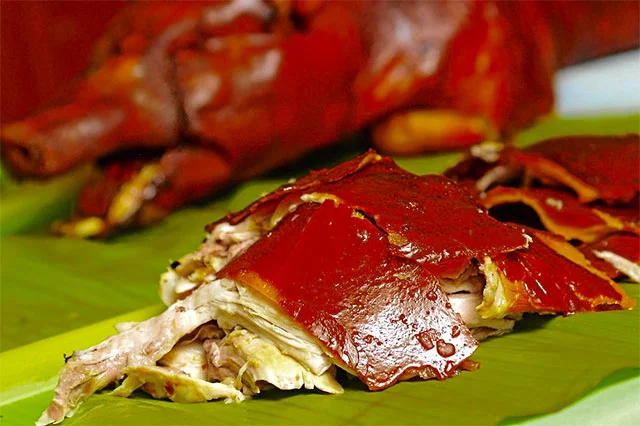
Ask any Filipino where to get the country’s best lechon, and most will point you straight to Cebu. This isn’t just local pride — when Anthony Bourdain tried whole roasted pig prepared by Cebuano chef Joel Binamira (who later opened the now-famous Zubuchon), he called it “the best pig, ever” and ranked Philippine lechon above every other roast pork tradition he’d tasted, anywhere in the world.
But Cebu’s food scene is bigger than one dish. Between lechon meals, most visitors on our tours ask the same question: what else should we actually eat while we’re here? This guide covers both — where to get lechon done right, and the other Cebuano dishes worth building into your trip.
What Makes Cebu Lechon Different
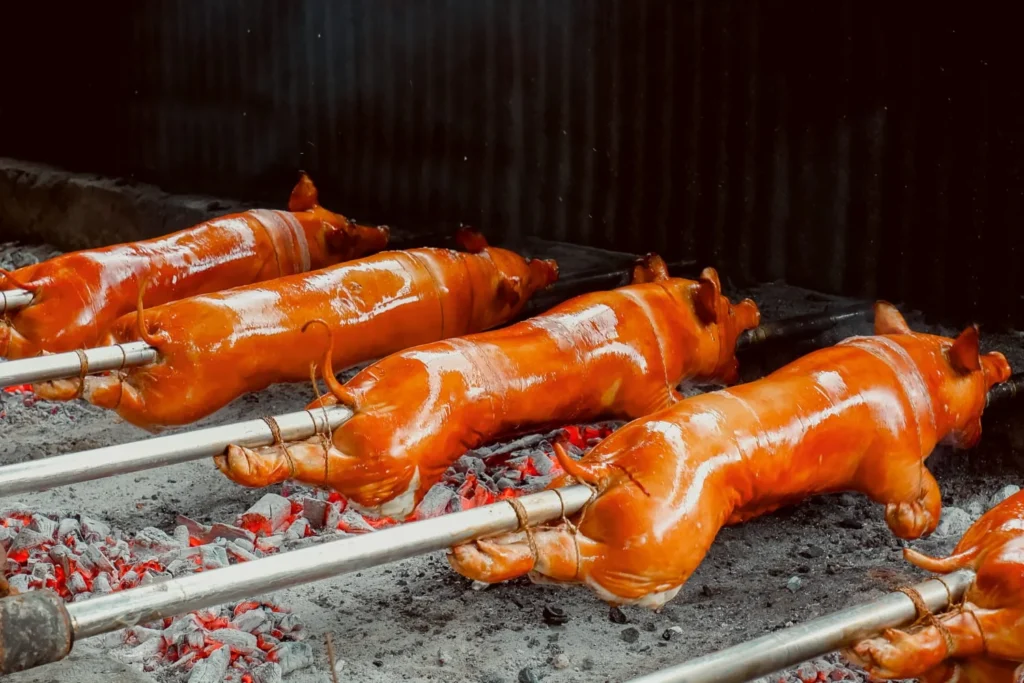
Cebu-style lechon is roasted whole over charcoal for several hours until the skin turns into shattering, blistered crackling — and unlike the Manila style, it’s rarely served with liver sauce. It doesn’t need it. The pig is stuffed with a mix of native aromatics — usually lemongrass (tanglad), garlic, onions, and spices — so the flavor is already built into the meat before it goes anywhere near a spit. That’s the whole reason it survives being eaten plain, straight off the counter, no sauce required.
Where to Eat the Best Lechon in Cebu
CnT Lechon — the local favorite. Cebuanos who don’t care about tourist reputation still queue here. No-frills, consistent, and considered by many residents to be the benchmark other lechon gets measured against.
Zubuchon — the one tied to the Bourdain story, with multiple branches around the city now. A safe, well-reviewed choice if you want the “famous” version without hunting for it.
Rico’s Lechon and House of Lechon — both long-running, well-regarded chains with several branches, slightly more budget-friendly than CnT or Zubuchon.
Carcar and Talisay — if you want lechon the way locals from outside the city eat it, the roadside stalls along the highway through Carcar and Talisay (about 30–45 minutes south of Cebu City) sell it fresh off the spit at a noticeably lower price than the restaurant chains. This stretch of road is one you’ll actually pass through on the way to Oslob or Moalboal, which makes it an easy, no-detour stop.
As a rough 2026 price guide: expect roughly ₱600–750 per kilo at the established restaurant chains (CnT, Zubuchon), ₱500–650 at Rico’s or House of Lechon, and ₱400–600 at the Carcar/Talisay roadside stalls. Lechon is typically sold by the kilo, and a kilo comfortably feeds 2–3 people alongside rice.
If you’re already booking a 2D1N South Cebu package or an Oslob car rental with driver, ask your driver to stop in Carcar on the way — it costs you nothing extra in time and it’s the most authentic version of the experience.
Beyond Lechon: Cebu Dishes Worth Trying
Lechon gets the headlines, but a handful of other dishes are just as Cebuano, and most visitors never hear about them:
Puso (hanging rice) — rice steamed inside a woven coconut-leaf pouch, sold hanging in bundles at almost every eatery and market. It’s the traditional pairing for lechon, grilled meat, or barbecue instead of a plain rice plate, and it’s worth trying at least once just for the presentation.
Sutukil — not one dish but a way of eating: sugba (grilled), tuwa (stewed in broth), and kilaw (raw seafood cured in vinegar), usually built around whatever’s fresh at the fish market that day. The seafood grill markets around Mactan are the classic place to do this — pick your fish or shellfish, tell the stall how you want it cooked, and eat it at a table right there. It pairs naturally with a day of Mactan island hopping, since most of the sutukil markets are a short ride from the same coastline.
Danggit — sun-dried rabbitfish, pan-fried until crisp and eaten with vinegar and rice, usually at breakfast. It also travels well, which makes it one of the more popular pasalubong (take-home gift) items.
Ngohiong — a Cebuano-Chinese snack, essentially a spiced lumpia filled with ubod (heart of palm) and pork, deep-fried and served with a sweet-tangy dip. You’ll find it at stalls around the Colon area and in the older parts of the city.
Torta — not the Spanish tortilla, but Cebu’s own version: a dense, slightly sweet native cake, particularly associated with the town of Argao further south.
Otap and masareal — the two pasalubong staples. Otap is a flaky, sugar-dusted puff pastry; masareal is a dense peanut-and-sugar candy bar. Both keep well and are what most Cebuanos actually bring home to relatives themselves.
Building a Food Stop Into Your Itinerary
You don’t need a dedicated “food tour” to eat well in Cebu — most of this fits naturally into tours you’d already be booking. A Half-Day Cebu City Tour or the Twin City Tour with Uphill Spots can easily include a lechon stop alongside the usual heritage sites, and if you’re heading south toward Oslob or Moalboal, Carcar is directly on the route — see our 3-day Cebu itinerary and things to do in Cebu City guides for how food stops slot into a fuller schedule.
If you’d rather build a custom route around specific food stops — a Carcar lechon stop plus a Mactan sutukil lunch, for example — get in touch with us directly and we’ll work it into your itinerary.
Cebu Food FAQ
1. Is Cebu lechon spicy?
No. The flavor comes from lemongrass, garlic, and onion stuffed inside the pig, not from chili. It’s savory rather than spicy, and it’s typically eaten without any sauce.
2. Where’s the cheapest place to try real Cebu lechon?
The roadside stalls in Carcar and Talisay, south of Cebu City, sell lechon at noticeably lower prices than the restaurant chains, without a drop in quality — it’s simply lower overhead.
3. What’s the best Cebu food to bring home as pasalubong?
Danggit, otap, masareal, and dried mangoes are the four most common choices — all travel well and don’t need refrigeration.
4. Can I add a food stop to a whale shark or canyoneering tour?
Yes — Carcar sits directly on the route south toward Oslob and Moalboal, so a lechon stop adds very little extra time to tours you’re likely already booking in that direction.
5. Do I need to book a separate food tour to try all of this?
Not really. Most of it — lechon, sutukil, pasalubong shopping — fits naturally into a city tour or a South Cebu day trip. A dedicated food-focused itinerary is only worth arranging if you want to go deeper than what a standard tour stop allows.













Have something to add? Log in to leave a comment.