
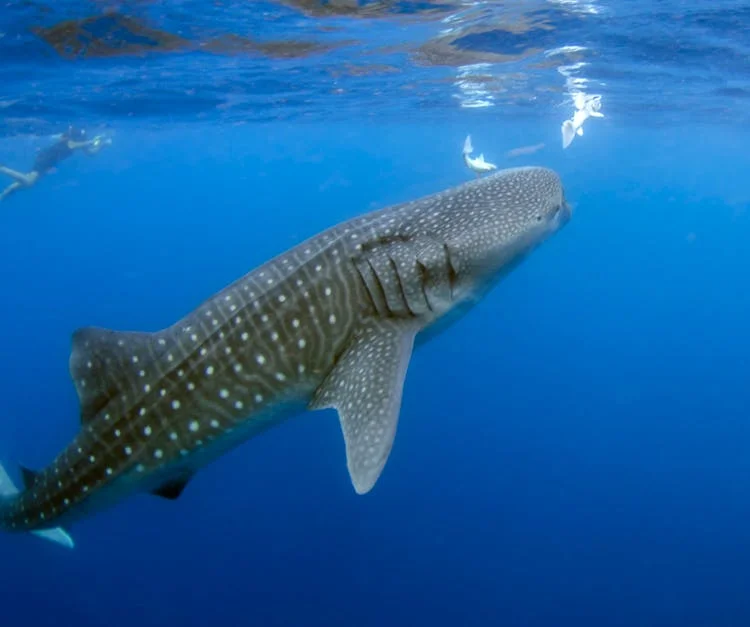
Before anyone in our groups gets near the water in Oslob, the briefing covers one thing first: keep your hands to yourself. Not your camera, not your fins — your hands. It sounds like an odd place to start a swim briefing, but it’s the rule most people break within the first five minutes, usually without meaning to.

Whale shark watching in Oslob runs on a specific set of rules set by the local government and BFAR (the Bureau of Fisheries and Aquatic Resources), and most of them exist for reasons that aren’t obvious until someone explains them. This is that explanation — what the rules are, why they’re there, and the part of this whole experience that doesn’t get talked about enough: the debate over whether feeding wild whale sharks to keep them near shore is something you should feel good about doing.
The Rules, As They Stand
- Stay at least 4 meters from the body, 5 meters from the tail. The original ordinance set this closer, at 2 meters — it was tightened after enough research showed that distance mattered more than anyone initially assumed.
- No touching. Whale sharks have a mucus coating on their skin that protects them from parasites and infection. A human hand strips that away in one contact.
- No flash photography. Nobody knows exactly how it affects the sharks, but the assumption in every marine protocol like this one is: if it’s a sudden bright light aimed at a wild animal, don’t risk it.
- No sunscreen before you get in the water. Whatever’s in your sunscreen goes into the water with you, and the water is where the sharks feed.
- No feeding by tourists. Feeding is done exclusively by licensed local fishermen under the BFAR permit. This isn’t really about tourist safety — it’s about keeping the feeding controlled and limited, which matters a lot more than it sounds like it should (more on that below).
- 30 minutes in the water, maximum. This is a crowd-and-stress control measure — Oslob gets a lot of boats on a busy morning, and thirty minutes keeps turnover moving without the sharks having ten boats’ worth of swimmers around them at once.
- Life vests are mandatory, even for confident swimmers. It keeps you horizontal and predictable in the water, which matters when you’re sharing it with an animal that can be over 12 meters long.
A peer-reviewed study that monitored compliance at the site found that around 93% of visitors ended up closer to the sharks than the minimum distance allows — not out of defiance, mostly just because a shark moves and people follow it without thinking. Knowing the number in advance helps. When you feel yourself drifting closer for a better photo, that’s the moment to actually stop.
The Part Most Guides Don’t Mention
Here’s what doesn’t make it into most “Oslob whale shark tips” articles: the whale sharks in Oslob aren’t behaving naturally, and that’s the whole point of how the site operates.
Whale sharks are migratory animals. The ones in Oslob mostly aren’t migrating anymore, because they’re fed daily by licensed fishermen specifically to keep them near shore, where boats can reach them reliably enough to run a tourism operation every single day of the year. Compare that to Donsol, in Sorsogon — the Philippines’ other well-known whale shark site — which runs on a seasonal, no-feeding model built around when the sharks show up naturally on their own.
Marine researchers have flagged real concerns with the Oslob approach: sharks that feed vertically, straight up under the boats to reach the food, instead of the horizontal filter-feeding pattern that’s natural for the species. Disrupted migration, which some scientists connect to breeding and reproduction patterns. In late May 2026, the whale sharks didn’t show up in Oslob for four straight days, which briefly halted operations and reignited the exact conversation about whether year-round provisioning is sustainable long-term.
None of that is a secret, and it’s not really in dispute among the scientists who study the site — the debate isn’t whether feeding changes shark behavior, it’s whether the tradeoff is worth it. And the honest answer is: it’s genuinely complicated. Oslob was a poor coastal town before this. Whale shark tourism turned the local economy around — households that used to get by on less than a dollar a day now have steady income tied directly to the health of that industry. That’s not a footnote; it’s the reason the feeding continues despite the criticism.
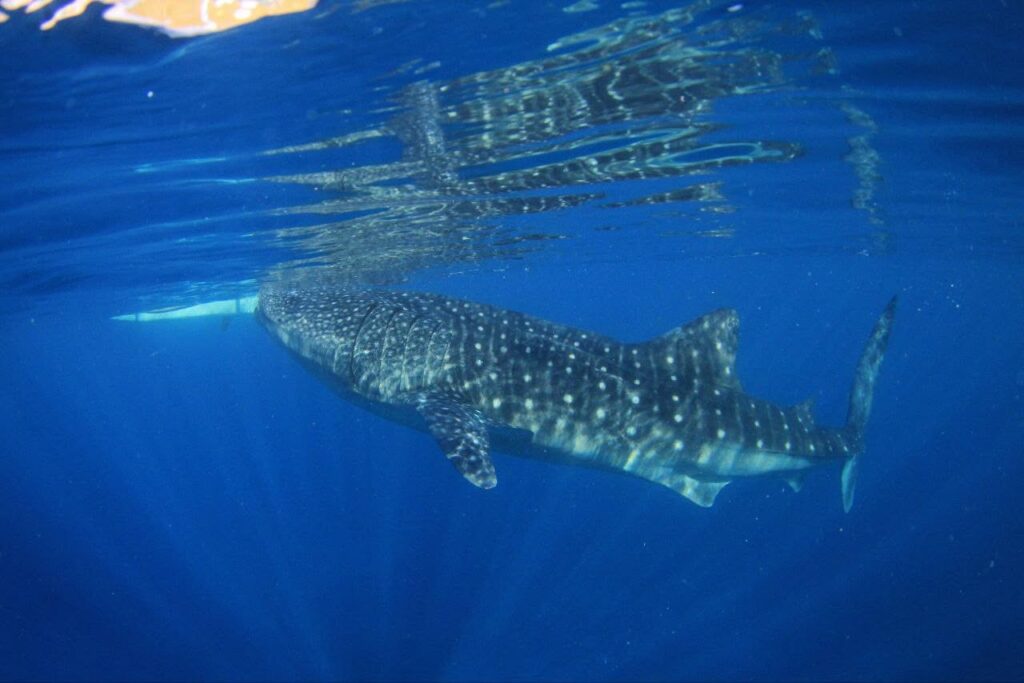
We’re not going to tell you not to book the tour — it’s one of our most requested packages, and it’s a genuinely extraordinary thing to be in the water next to an animal that size. But “ethical” isn’t a box you check once by picking the right operator. It’s something you do every minute you’re in the water: keeping your distance even when the current pulls you closer, not asking your boatman to nudge you nearer for a better shot, accepting that a good photo isn’t worth breaking the one rule that exists to protect the animal you came to see.
Practical Details
Whale shark watching runs daily, 6:00 AM to 12:00 PM, except Good Friday. Registration cuts off at 11:00 AM, but realistically, go earlier than that. Morning is not a suggestion here — the sharks are most active early, the water’s calmer, and by mid-morning the boat traffic thickens considerably. If you can be in the water by 7:00 AM, do it.
The Oslob LGU charges a flat watching/environmental fee separate from your tour package (confirm the current rate when you book, since local fees do change over time). You’ll get a short mandatory briefing at the watching center in Tan-awan before you’re taken out — this is where the rules above get explained in person, and it’s worth actually listening even if you’ve read this whole guide already.
If you want the full rundown on what makes whale sharks worth all this — how big they actually get, what they eat, how long they live — we’ve covered that separately in our whale shark facts guide. For getting from Cebu City to Oslob itself, see our travel guide to Oslob.
Booking With Us
Every group we take to Oslob gets the rules explained before we’re anywhere near the water, not just once at the briefing center but again from our own guide, in plain language. We’d rather spend two extra minutes on it than have someone in our group be part of that 93%. If you want to see the full whale shark watching package, or you’re weighing it against other things to do in the area, our Oslob destination page has the rest of what’s nearby. Questions about the rules, the ethics, or anything else before you book — reach out directly and we’ll give you a straight answer.
Quick Questions
Is swimming with whale sharks in Oslob actually ethical? It’s contested, and reasonable people land in different places on it. The feeding practice does alter natural shark behavior, which is a legitimate concern researchers have raised. It’s also directly responsible for transforming a poor fishing town’s economy. Neither fact cancels the other out — going in aware of both, and following the rules strictly once you’re there, is the honest way to approach it.
What happens if you touch a whale shark by accident? Nothing happens to you, but tell your guide — repeated contact at the site is part of what researchers track when studying impact on the sharks’ skin and health.
Why is the water time limited to 30 minutes? Crowd control, mainly. It keeps the number of swimmers around each shark manageable through a busy morning instead of one shark having an unlimited number of boats and swimmers around it at once.
Can I dive instead of snorkel? Scuba diving with the whale sharks is available as a separate, more controlled experience with fewer people in the water at once — worth asking about specifically if minimizing your impact is a priority.
Do the rules apply equally to every tour operator in Oslob? On paper, yes — the ordinance applies site-wide. In practice, enforcement varies by boat and by guide, which is exactly why the rules are worth knowing yourself instead of assuming every operator will walk you through them properly.













Have something to add? Log in to leave a comment.